
Richard Lamberty didn’t set out to change the world of dance. He just wanted to dance.
“I grew up loving to dance and I just wanted to get to do that. And I kept running into barriers from earliest childhood,” Lamberty said.
The first barriers were physical, a painful bone growth disorder, but the barriers that would prove hardest to overcome weren’t physical at all. They were cultural. “Literally the first day of first grade at the new school, I started being hit, kicked, spit on, rocks thrown at me,” said Lamberty. “And that was always true. All of my schooling, including college, looked like that.”
Richard became fascinated with the different footwork and movement of female partners. So he worked to master both sides of the dance, learning to lead and to follow. “It has nothing to do with being a man or a woman, and it has everything to do with the space that you’re creating with your partner and that exchange and the dialogue that’s happening,” Lamberty said.
But competitive dance rules were strictly genderized and cultural norms were even more rigid. It was illegal in most states for two men to dance together in public. Then Richard discovered something happening in Europe that changed what he believed was possible.
“So, when I discovered that there was this thing going on in Europe where there was same sex dancing, I really wanted to do this,” said Lamberty.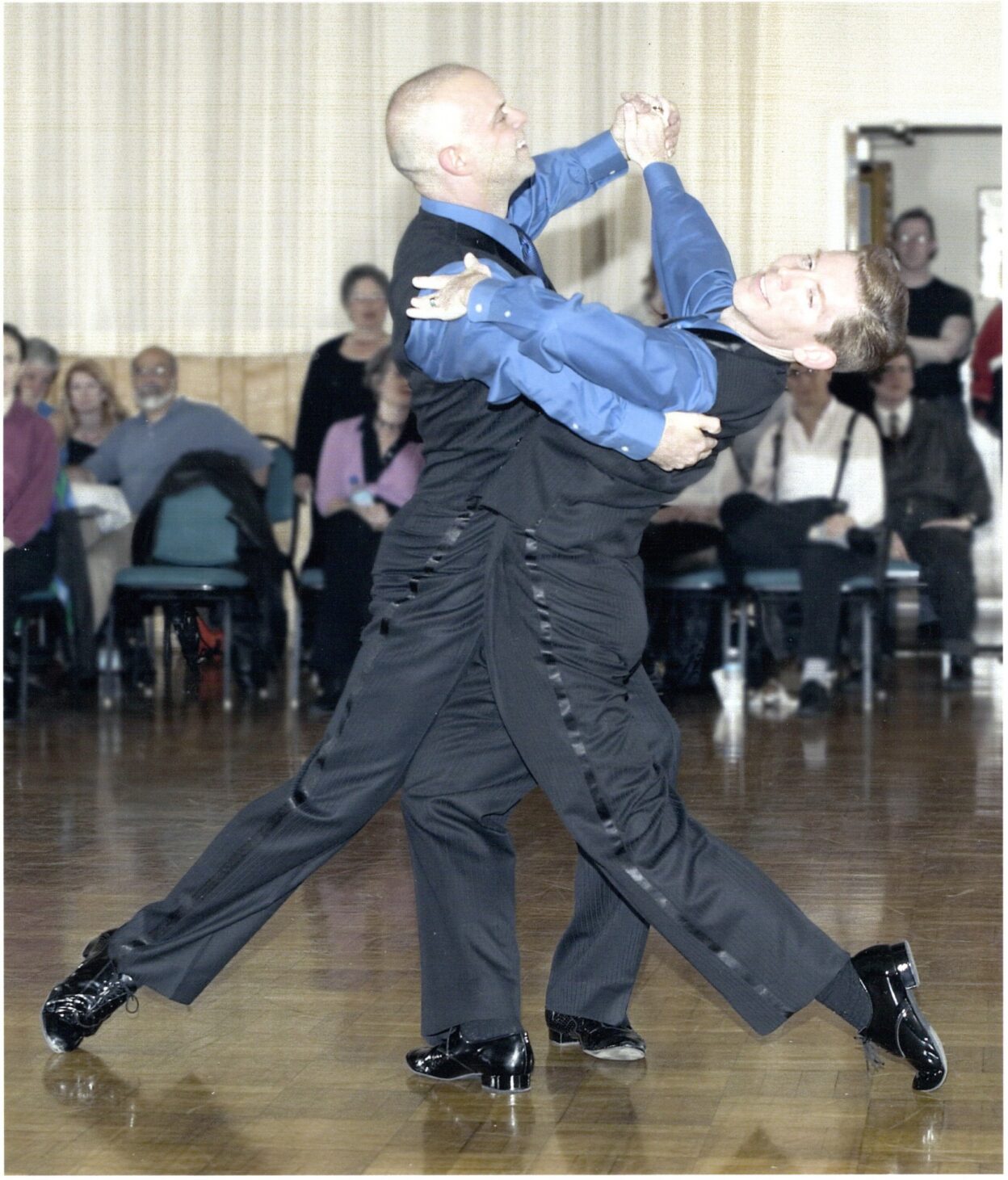
He competed with a male partner in the gay games, eventually co-founding April Folley’s, a place where anyone could experience the joy of dance without having to fit someone else’s definition of who should lead, who should follow, or who should dance with whom.
“This place to dance for anyone to come and experience their passion on the dance floor in an environment that is so open and accepting for anyone and everyone,” said Lamberty. “It has nothing to do with sex or who you’re going to go home with that night. It just has to do with the joy of sharing that moment.”
Richard didn’t just create a safe space for all dancers. He started a movement that ultimately changed dance itself, because mainstream dancing now allows same sex couples to enter on an equal footing and be judged fairly. The rules had changed, the culture had changed, and Richard’s quiet persistence had helped change both. It doesn’t matter if it’s Tango or West Coast Swing or Lindy Hop or Salsa. All of these dance environments now embrace the joy of dancing without the necessity to genderize it.
Richard became a two-time world champion and the subject of the bestselling children’s book, A Place to Dance.
“I can’t keep it inside,” Lamberty said. “The tears just roll down my face and it’s joy. It’s the joy that this story that I didn’t know was a story is in the world and people love it.”
Because Richard’s story was never really just about dance, it was about finding a place where you don’t have to pretend to be someone you’re not.
“I get told all the time, I made a real difference,” said Lamberty. “Laws are different because of what I said and did, that the insistence that I had.”
On his journey to international dance icon, Richard learned to rely on Uber.
“Because I was going to have to walk through the door and just be ready and being able to get in the Uber and when I got where I was going, I was so ready to just walk in the door and be on for what I needed to be doing,” Lamberty said. “It was an awesome experience.”
It was an experience he was anxious to share with his mother, who voluntarily gave up her driver’s license at 90.
“My mother loved Uber. It kept her in the world,” said Lamberty. “It puts people back in control of their lives to get where they need to go and do the things they need to do with a sense of agency and self-reliance. It’s amazing tool. I love it.”